

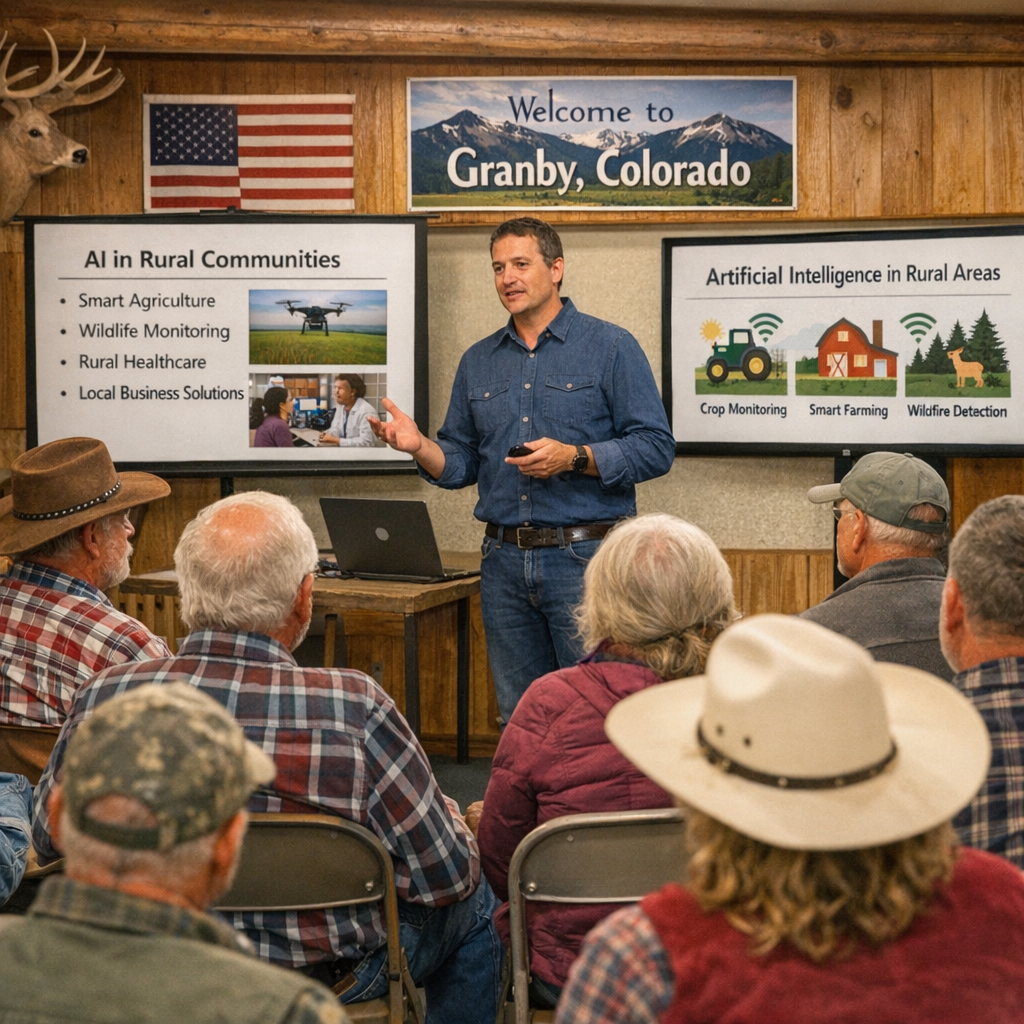
Artificial Intelligence (AI) is rapidly transforming industries and daily life, yet its adoption varies significantly between urban and rural areas. In Colorado, while cities like Denver have become AI hubs, rural communities such as Granby face unique challenges and opportunities in embracing this technology.
The Urban-Rural AI Divide
Recent studies highlight a stark contrast in AI usage: nearly one-third of urban residents engage with AI, compared to only 16.2% in rural areas. This disparity risks widening existing economic and technological gaps. Microsoft President Brad Smith emphasizes the need to address this divide to ensure equitable access to AI’s benefits, including enhanced healthcare and education services.
Colorado’s AI Landscape
Colorado ranks eighth in the U.S. for per-capita AI usage, underscoring the state’s growing role in the AI sector. Denver, in particular, has hosted AI summits and boasts a skilled workforce of over 8,000 AI specialists. However, this growth has been predominantly urban-centric, leaving rural areas like Granby with limited exposure and resources.
Empowering Rural Communities
Organizations such as the Center for Rural AI (CRAI) are working to bridge this gap. Based in Durango, CRAI aims to transform rural higher education institutions and communities into active participants in the global AI economy. Their initiatives include AI training programs, workshops, and partnerships with local businesses to foster AI integration.
For instance, CRAI’s upcoming workshop, “AI for Business — AI Skilling in the Workplace,” offers hands-on training for business owners and HR leaders. Such programs are crucial for rural communities to develop AI literacy and leverage technology for local economic development.
Local Initiatives and Opportunities
In Granby, integrating AI into sectors like agriculture, tourism, and small businesses can drive efficiency and innovation. Local educational institutions and community organizations can collaborate to offer AI training, ensuring residents are equipped to participate in the evolving digital economy.
Moreover, as AI data center developers increasingly target rural areas to bypass urban regulations, communities like Granby have the opportunity to attract such investments. However, it’s essential to balance development with environmental considerations and community interests.
Conclusion
While challenges exist, the potential for AI to positively impact rural communities like Granby is significant. By embracing AI education and fostering local initiatives, Granby can position itself as a proactive participant in Colorado’s AI-driven future.