

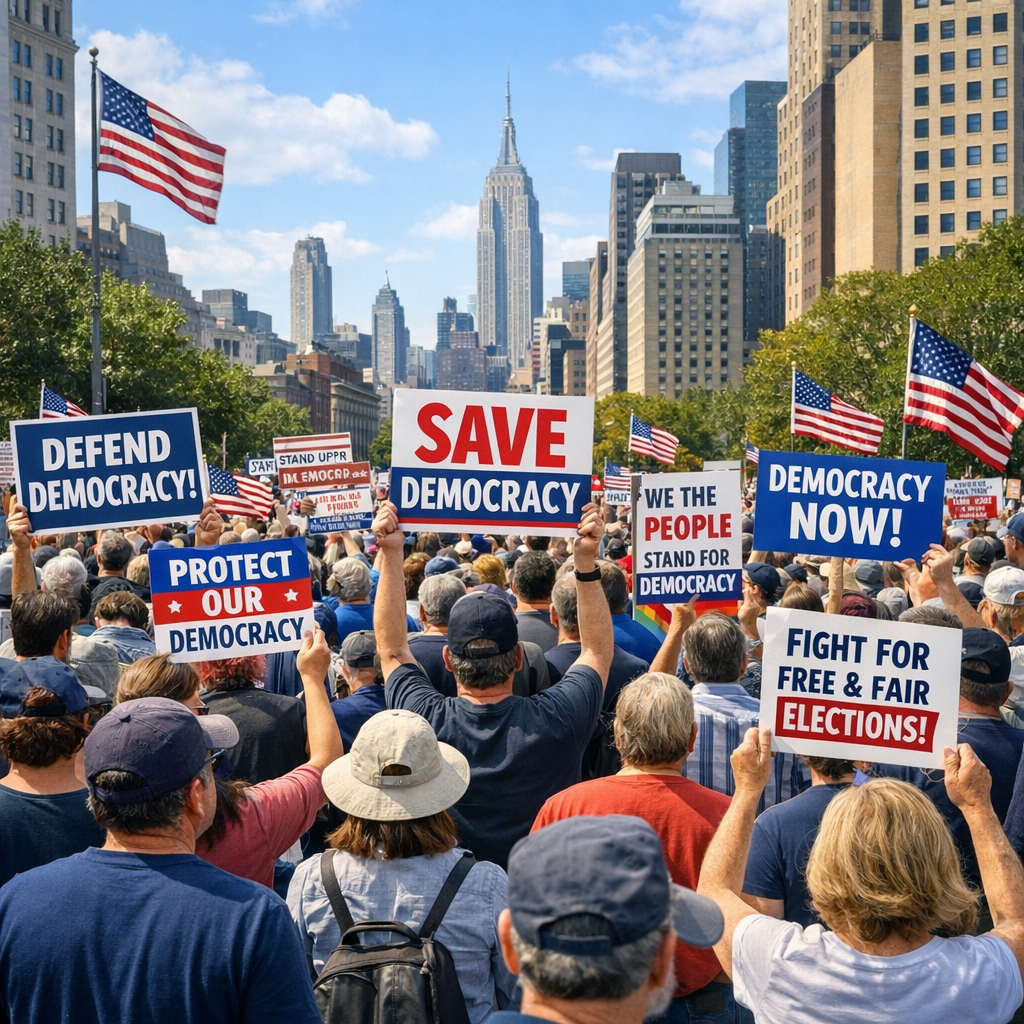
In recent months, the ‘No Kings’ movement has gained significant traction across the United States, with rallies drawing large crowds advocating for the preservation of democratic principles and expressing concerns over perceived authoritarian tendencies in the current administration.
Origins and Growth of the Movement
The ‘No Kings’ movement emerged as a grassroots response to policies and actions by the federal government that many citizens view as undermining democratic norms. The movement’s name symbolizes a rejection of autocratic leadership and a reaffirmation of the nation’s foundational commitment to democracy.
From major urban centers to small towns, Americans have organized and participated in these rallies, reflecting a widespread desire to engage in the democratic process and hold leaders accountable.
Key Events and Public Response
One of the most notable events took place in St. Paul, Minnesota, where thousands gathered on the Capitol lawn. The rally featured performances and speeches from prominent figures, emphasizing the importance of civic engagement and resistance to policies perceived as overreaching.
Similar rallies have occurred nationwide, from New York City to Driggs, Idaho, illustrating the movement’s broad appeal across diverse communities.
Implications for the Future
The ‘No Kings’ movement underscores a growing public demand for transparency, accountability, and adherence to democratic principles. As the movement continues to evolve, it may influence policy decisions and encourage greater civic participation among citizens concerned about the direction of national governance.
For residents of Granby, Colorado, and beyond, the ‘No Kings’ movement serves as a reminder of the power of collective action and the enduring importance of democratic values in shaping the nation’s future.